Lovable
AI full-stack app builder, chat to app
- Category
- Coding
- Tested version
- Lovable 2026
- Free tier
- Yes
- API
- Not available
- Platforms
- Web Browser
- Pricing
- Free tier (limited) · Starter $20/mo · Launch $50/mo · Scale $100/mo.
- Official site
- lovable.dev
- Updated
- 2026-07-21
- Editorial status
- Editorially reviewed
TL;DR — Key Takeaways
- Lovable is a coding AI tool: AI full-stack app builder, chat to app.
- Pricing: Free tier (limited) · Starter $20/mo · Launch $50/mo · Scale $100/mo.
- Best for: MVPs.
- Editorially reviewed by AI Tool Hub (tested version: Lovable 2026).
What is Lovable?
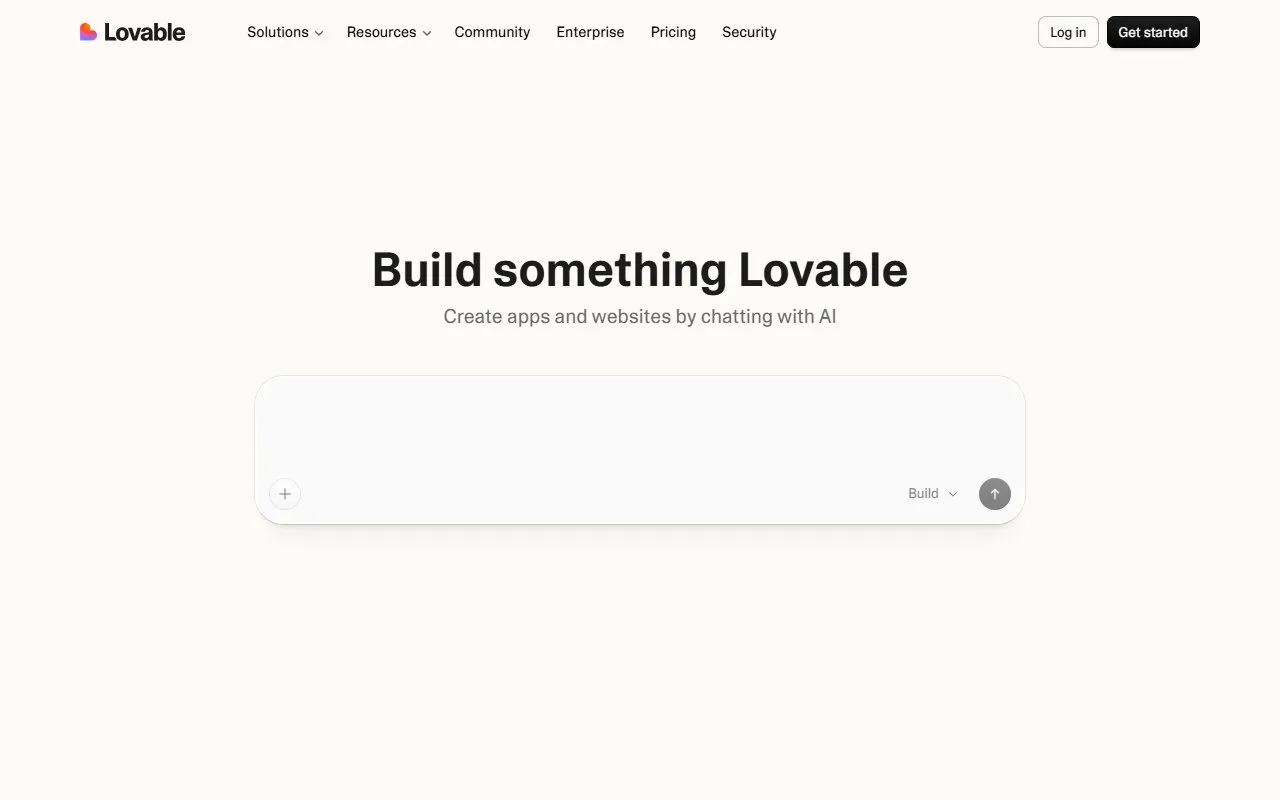
Lovable generates full-stack apps (frontend+backend+DB) from natural language chat, deployable.
Our take
Lovable. Lovable generates full-stack apps (frontend+backend+DB) from natural language chat, deployable.
Screenshots
Real test data
Lovable is editorially reviewed (tested version: Lovable 2026). Our standardized real-test data will be published here once the shared benchmark suite completes.
We do not display fabricated or vendor-supplied benchmark numbers.
Key features
| Feature | What it does |
|---|---|
| Chat-to-app | MVPs |
| Full-stack | Internal tools |
| Deploy | Protos |
| Supabase | SaaS |
Use cases that actually work
- MVPs
- Internal tools
- Protos
- SaaS
Best for
- Full-stack apps
- MVPs
- Internal tools
Target audience
Pricing
Free tier (limited) · Starter $20/mo · Launch $50/mo · Scale $100/mo.
Pros & Cons
Pros
- Full-stack gen
- Easy deploy
- Fast iterate
Cons
- Complex projects limited
- Less code control
Example
Our verdict
Pick Lovable if: Lovable is a fit if you need a reliable coding AI tool with full-stack gen.
Skip Lovable if: Lovable is not the right fit if you need capabilities outside coding — look at the alternatives below.
Head-to-head comparisons
Alternatives to Lovable
GitHub Copilot
AI pair programmer embedded in your IDE
CodingCursor
AI-native code editor built on VS Code
CodingCline
Autonomous coding agent for VS Code
CodingWindsurf
AI IDE by Codeium, main Cursor competitor
CodingAider
CLI AI coding assistant, Git-native
CodingCodeium
Free AI code completion, Copilot alternative
CodingFrequently asked questions
What makes Lovable different from Bolt?
Lovable is built around Supabase, so user auth, database, and storage are included from the start. Bolt is better for Node.js/React apps without a database. Lovable is stronger for SaaS MVPs.
Can non-technical founders use Lovable?
Yes. The chat-to-app interface lets you describe your idea in plain English. Lovable generates the full stack, deploys it, and gives you a live URL.
Does Lovable support custom domains?
Yes. Paid plans support custom domains. The free tier gives you a lovable.app subdomain.
Can I export the code from Lovable?
Yes. You can export the full project to a GitHub repository and continue developing locally or with your team.
What tech stack does Lovable use?
React + TypeScript frontend, Supabase for backend (PostgreSQL, auth, storage), and Tailwind CSS. Deployed on Lovable's hosting infrastructure.
Is Lovable good for internal tools?
Yes. With Supabase's built-in auth and row-level security, you can build internal dashboards, admin panels, and CRUD apps quickly.
How does Lovable pricing compare to Bolt?
Starter at $20/mo is similar to Bolt Pro. Launch at $50/mo adds more generous limits. Both are comparable for MVP development.
Can Lovable handle complex logic?
It handles CRUD, auth flows, and basic business logic well. For complex algorithms or custom API integrations, you may need to extend the generated code.
Does Lovable have a mobile app?
No. Lovable generates web apps that are responsive and mobile-friendly. For native mobile apps, consider React Native or Flutter.
Who should use Lovable?
Non-technical founders building SaaS MVPs, product teams prototyping with real data, and anyone who needs a full-stack app with a database without writing backend code.
Curated by the AI Tool Hub editorial team — last updated 2026-07-21. We publish real-test benchmark numbers only after running our standardized suite.